How to affordably get your school's Wi-Fi network up to standard in 2026

June 20, 2026 - Wi-Fi networks in Dutch schools are significantly outdated. Many of these networks were rolled out in a hurry during COVID-19 (2020–2021) to enable digital education. At the time, they were the perfect lifebuoy, but 6 years later, they are hopelessly obsolete. Due to stricter privacy requirements and the increasingly intensive, simultaneous use of software, they have reached their limit. Fortunately, migrating to Wi-Fi 7 with Alcadis does not have to cost a fortune.
Why Wi-Fi 7 is a game changer
Although networks from 2020 can often still keep daily lessons running, it is not always a smooth experience. Buffering videos, locations where there is no signal or a very poor one… Not a major disaster, but it is certainly not ideal.
Wi-Fi 7 definitively puts an end to these annoyances. Thanks to technologies such as Multi-Link Operation (MLO), devices can now communicate over multiple frequency bands simultaneously. Does a video start buffering on one band? Then the connection switches smoothly and imperceptibly to another. This means an entire class can take an online exam at the same time, or you can stream 4K videos on a digital board without the connection dropping.
Furthermore, due to the introduction of 320 MHz channels on the new and largely empty 6 GHz band, schools no longer suffer from interference from nearby networks or students' mobile phones. Even if they are tucked away in a locker! Wi-Fi 7 also takes a huge step forward in terms of GDPR and NIS2: by supporting WPA3 security, you are instantly compliant with this new European legislation.
This is just a small portion of all the benefits. View our article on all Wi-Fi 7 standards for a deep dive →
The education partner of the Benelux
Starting with enterprise Wi-Fi 7 is extremely simple in 2026. Alcadis not only offers products from various brands, but we also take the burden off resellers and end customers with network design. All that is needed is a floor plan of the location! From our office, we can use special software to determine where Access Points and Switches should be installed to achieve maximum coverage and advise on the best brand.
To give you a preview: in previous reports for school environments, the following 3 brands came out on top.
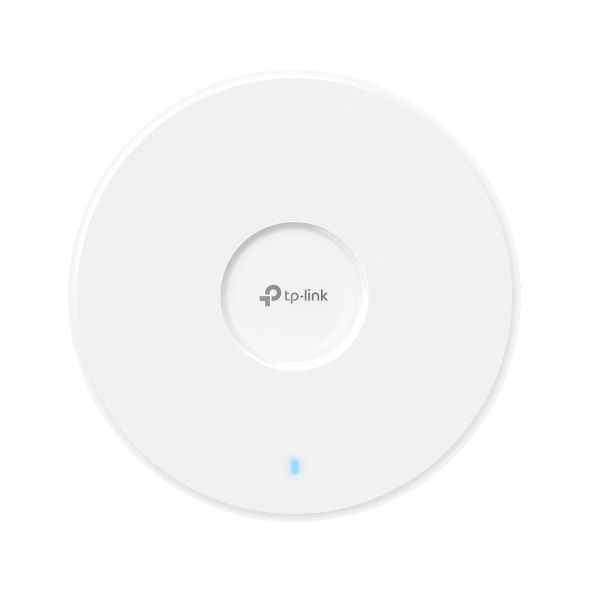
Option A: Omada – Affordable Enterprise Quality
Do you want to benefit from Wi-Fi 7, but are you dealing with a tight budget? Omada offers the ideal solution. This manufacturer knows better than anyone how to build professional Access Points and Switches without sky-high costs. Omada also produces its own security cameras. All can be managed in the same on-site, software, or Cloud Controller. This gives schools modern technology at a price that will make the accountant happy too.
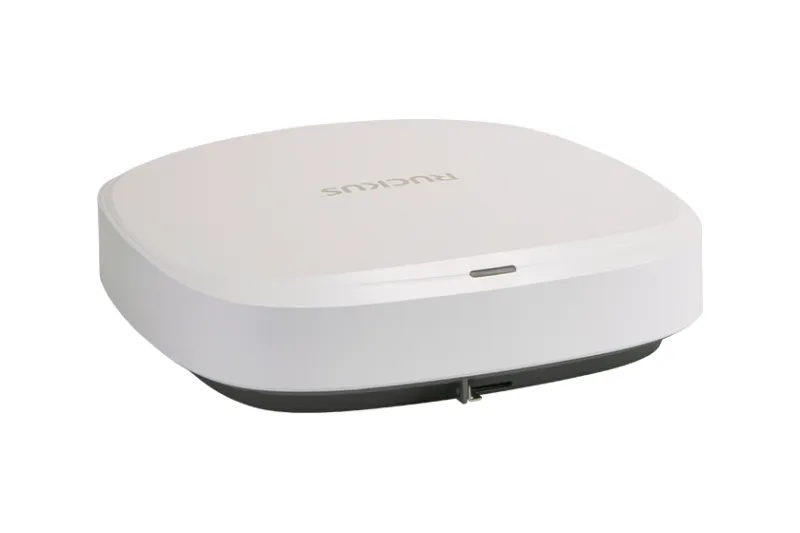
Option B: RUCKUS – The absolute king of high-density
For large school communities, RUCKUS Networks is a popular choice worldwide. This vendor is the absolute king of high-density environments. Thanks to patented, smart antenna technology, Wi-Fi signals are directed very specifically toward active devices. Even when hundreds of students log in at the same time in a crowded auditorium or exam hall, this network does not flinch. Good onboarding also makes it surprisingly user-friendly.
⚠️ 4 years ago, an independent researcher, Packet6, compared RUCKUS, HP Aruba, Cisco Meraki, Extreme, and Juniper Mist, and RUCKUS came out as the best in the test.
Option C: Alcatel-Lucent Enterprise – The European network player
When you choose Omada or RUCKUS, you are certainly in good hands when it comes to security. As mentioned earlier, both brands support WPA3 and all the features that come with it. But do you want to keep your network completely European? Then this French provider is a good choice. For schools that want maximum guarantees regarding where their network data is stored and managed, ALE offers a rock-solid and GDPR-friendly foundation.
Refine by
Display prices in:EUR