Dual-Band Wi-Fi 7 vs. Tri-Band Wi-Fi 7: Why Dual-band Wi-Fi 7 is not a bad choice in 2026

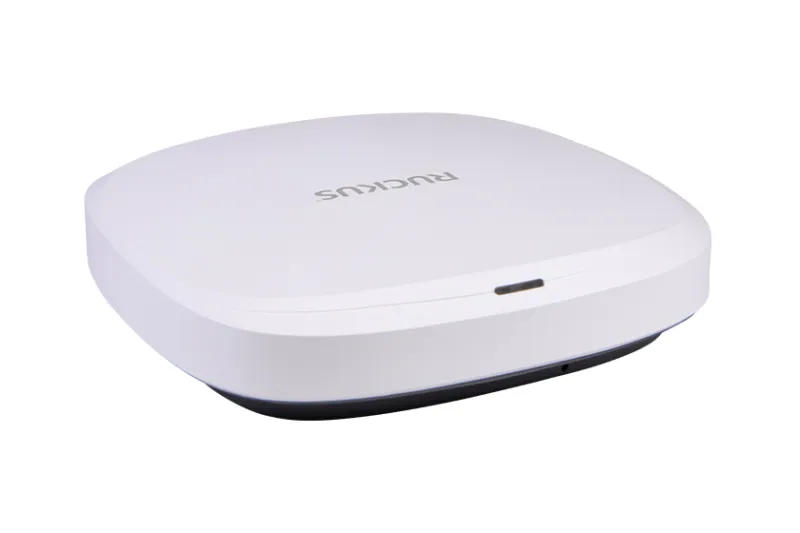
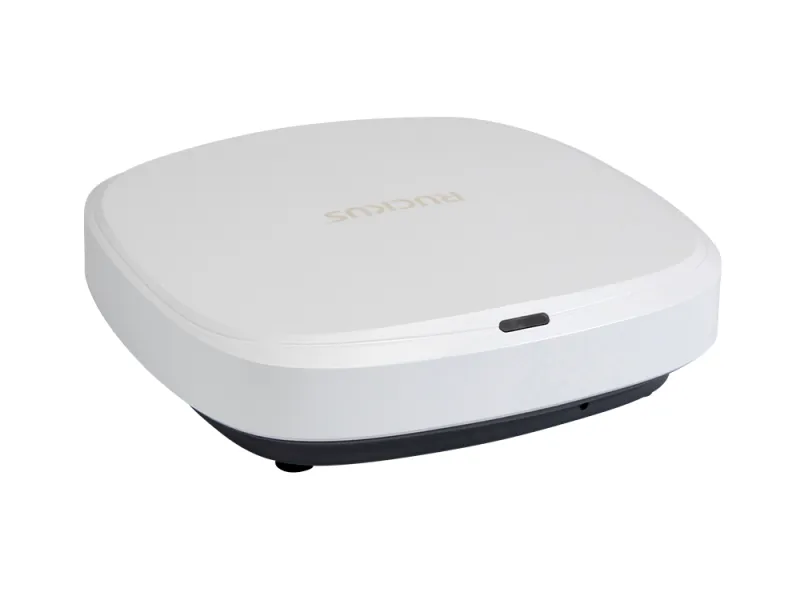
May 21, 2026 - Wi-Fi 7 and 6 GHz are inextricably linked. It is no coincidence that the Wi-Fi Alliance headlined in 2024: "6 GHz Wi-Fi [will] empower connectivity." We can therefore imagine that Dual-Band Wi-Fi 7 Access Points (AP), such as the R370, sound completely contradictory. Why would you upgrade to the latest Wi-Fi standard only to skip the biggest innovation? Yet, that choice is a lot less crazy than you think.
Traffic jam on the 6 GHz highway
Compared to the US and Brazil, the 6 GHz band is still only limitedly available in the Netherlands. Strict government regulations ensure that only 480 MHz is available on the 6 GHz band in European countries, while 1200 MHz is theoretically achievable. Due to this limitation, you will not achieve the utopian speeds listed on the tri-band boxes for the time being, and 6 GHz is a lot less interesting.
Future-proofing
Of course, the 6 GHz band will not remain limited in availability in Europe forever, but Dual-Band Wi-Fi 7 is also not a wrong choice from a future-proofing perspective. Wi-Fi 7 brings many more upgrades than just a new frequency. Smart technologies, such as Multi-Link Operation (MLO) and Preamble Puncturing, ensure that signals become a lot faster and more stable, even on the 2.4 GHz and 5 GHz bands.
Do you have an average office, hotel, or retail property? Then Dual-Band Wi-Fi 7 offers you everything you will need in the coming years. Think of the recent, explosive growth of IoT equipment in the workplace. Smart meters, sensors, lighting, and handheld scanners communicate almost exclusively via the 2.4 GHz band. And many smartphones, laptops, and tablets do not even support 6 GHz yet.
When is Tri-Band a sensible choice?
Does that mean there is no reason to choose Tri-Band Wi-Fi 7 in 2026? Certainly not. 6 GHz remains a useful technology, but in specific scenarios. Do you need to design a network for a high-density environment like a university, an exhibition hall, or a crowded office landscape where hundreds of people go online simultaneously? Then even that small European piece of 6 GHz helps to relieve the congestion on the 5 GHz band.
Also, for mission-critical applications that cannot afford any latency, the empty and interference-free 6 GHz band offers a massive advantage because there is (as of yet) no 'legacy interference.' Progressive organizations that make intensive use of, for example, AR/VR, robotics, or high-end video editing via the network will find the ultimate highway for their data in tri-band.
Not a bad choice
At the end of the day, the choice between dual-band and tri-band Wi-Fi 7 is not a matter of 'good or bad,' but of thinking logically about your location. At Alcadis, with the R370 from RUCKUS, we have the best Dual-Band Wi-Fi 7 Access Point on the market. Still want to take the step to Tri-Band Wi-Fi 7 in 2026? Then the R670 is the product of your dreams. By purchasing either AP, you benefit from all the advantages of RUCKUS, such as BeamFlex+, ChannelFly, and more.
Become an Alcadis partner and place your first order below.
Refine by
Display prices in:EUR