Internet on container ships: What you need to take into account
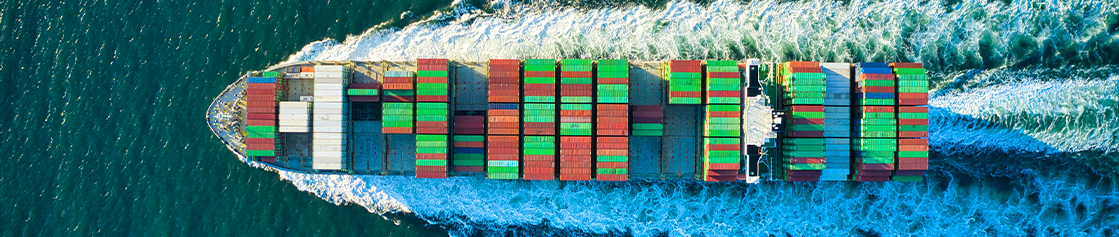
July 1, 2026 – In July 2020, one of the most bizarre maritime disasters occurred off the coast of Mauritius. The MV Wakashio, a massive Japanese bulk carrier, ran aground on a coral reef, causing a catastrophic oil spill. The cause? Not a severe storm or a technical failure, but the search for a Wi-Fi signal. The crew intentionally steered the ship close to the coastline in hopes of picking up a mobile connection to call home.
It just goes to show how vital Wi-Fi is—even in the middle of the ocean. It’s not just for calling home, but also for navigation (ECDIS), sensors, and inventory management.
More than just installing Starlink
When setting up a network for ships, the focus is often primarily on broadband satellite connections like Starlink. While this solution is indispensable for maritime WAN backhaul, it is only a small piece of the overall network puzzle. The signal might make it on board, but it still needs to be distributed throughout the entire vessel. This is an even more complex challenge due to the thick, watertight compartments, extreme vibrations, and salty sea air.
3 best practices we have learned
1. Pick the right Access Points and Switches
For seafaring environments, it is best to opt for Access Points and Switches with IEC 60945 (Class A and B) and DNV-GL certifications. These are the highest possible industrial standards specifically designed for seafaring.
2. Set-up Shortest Path Bridging
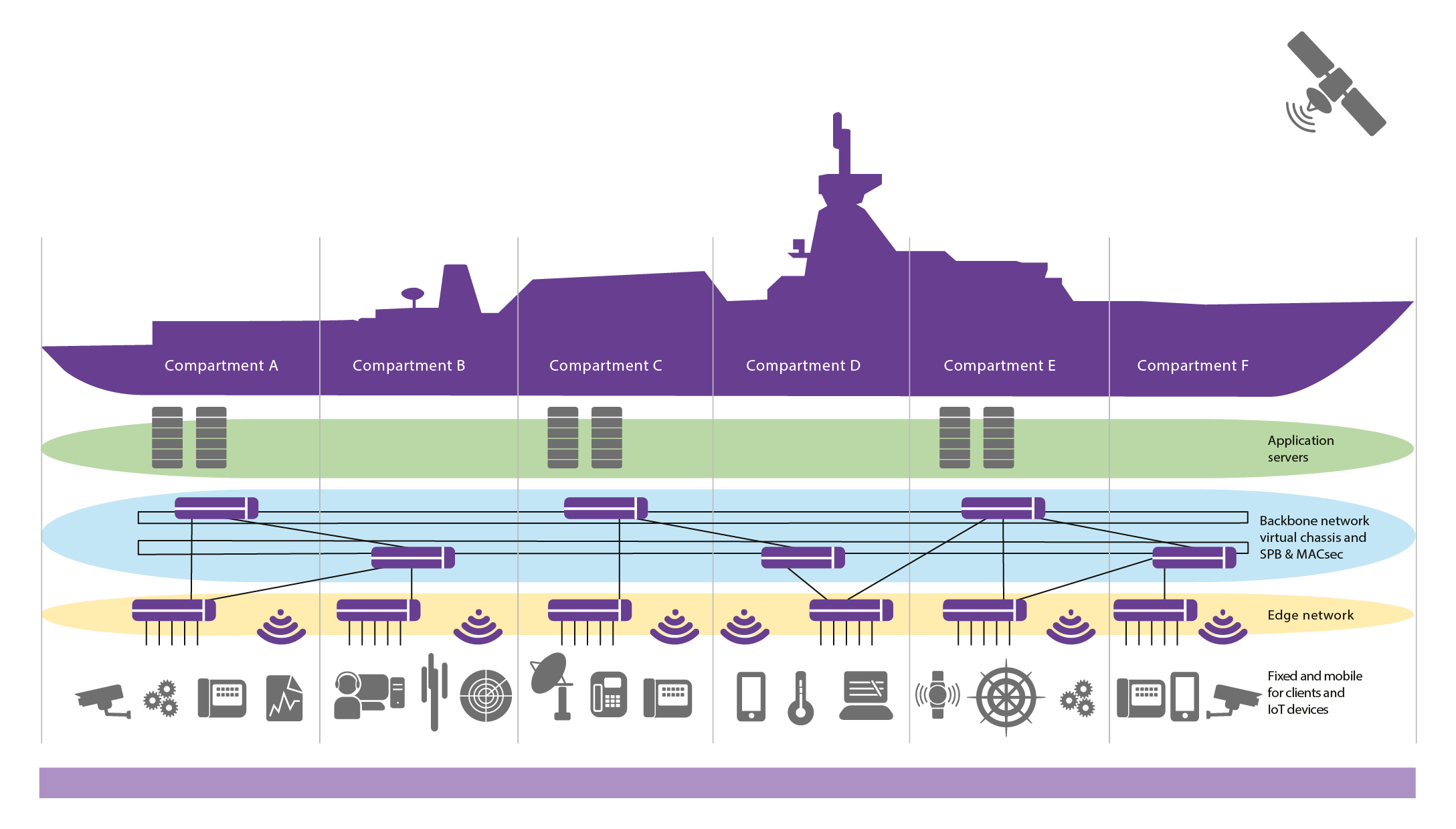
Furthermore, the physical construction of a vessel requires a completely different network architecture. Because the hull is divided into watertight compartments, it is wise to utilize Shortest Path Bridging (SPB) on board. This creates a so-called "self-healing network." If a compartment fails or floods due to an emergency, the network reroutes data paths within a fraction of a second. This ensures that data communication between the remaining, undamaged parts of the ship stays intact.
3. Don't forget management
Managing the available bandwidth also plays a crucial role. Without proper local management, data usage can interfere with operational systems. By applying network segmentation and User Network Profiles (UNP), network traffic is strictly separated. This ensures that critical data streams—such as navigation, emergency systems, and the IoT monitoring of refrigerated containers—are always given fixed priority over general internet connections used for things like calling home.
Our favorite solution for shipping
Alcadis is no stranger to designing networks for the maritime sector. As a Value-Added Distributor, we not only supply the necessary products, but we can also step in to assist with network design, technical support, and even project management. For the shipping industry, Alcatel-Lucent Enterprise (ALE) is our go-to solution. When you line up your must-haves for a container ship network (IEC 60945, Shortest Path Bridging, UNP, etc.), ALE is the only one that meets every single requirement.
An added bonus: ALE is European, meaning it fully complies with all European privacy and security legislation. For container ships, which are becoming increasingly vulnerable, this is no unnecessary luxury. Want to brainstorm about your project with absolutely no obligation? Fill out the form on the right. We would love to think along with you about the possibilities for your specific situation.
Display prices in:EUR